MSI tool performance metric analysis suite
A suite of code and scripts to measure the performance of microsatellite instability tools in next-generation sequencing data. 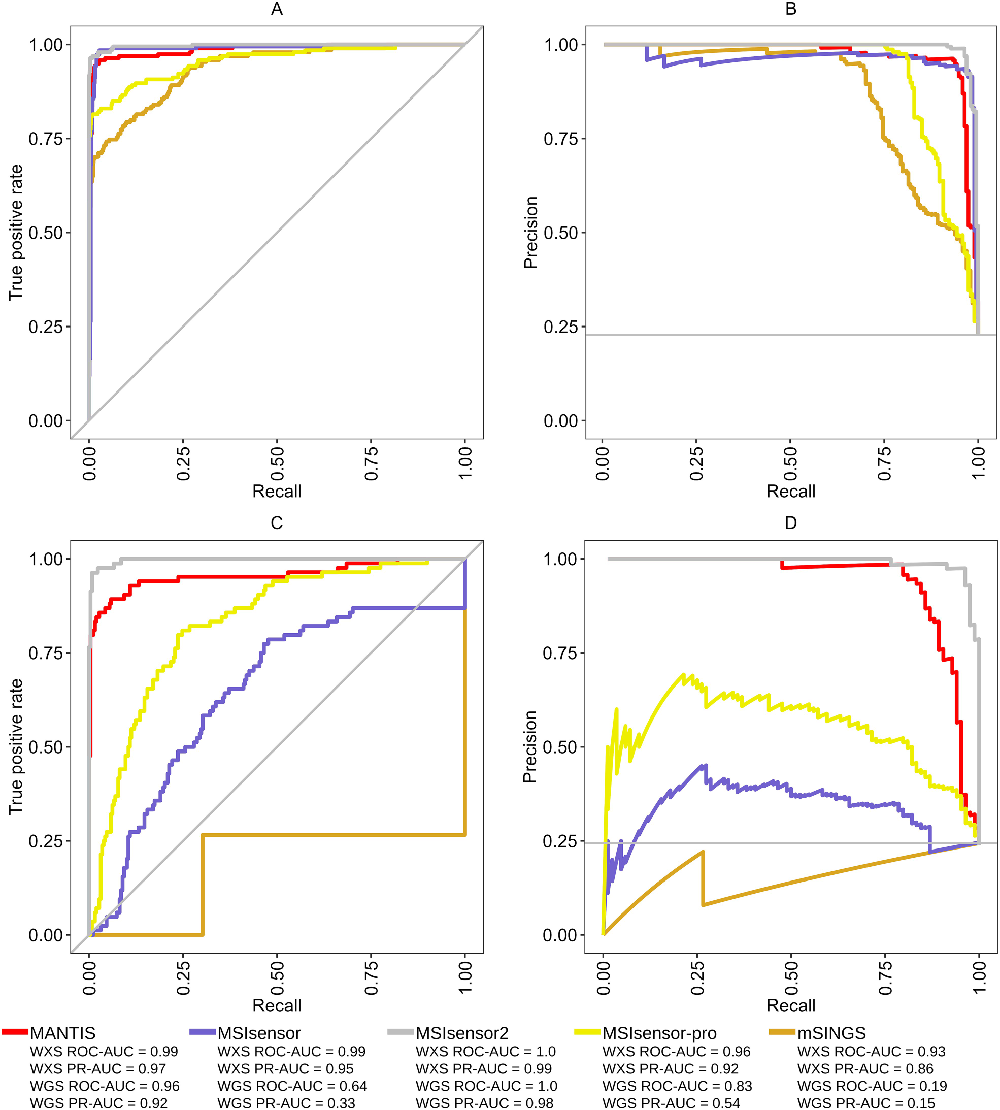
A suite of code and scripts to measure the performance of microsatellite instability tools in next-generation sequencing data.
Published in Washington State University library, 2021
Large amounts of genetic variation structured at the site level despite bottlenecks and asexuality in an invasive snail.
Recommended citation: Harrison Anthony. (2021). "How does genomic variation evolve in asexual populations after an invasion event?" Washington State University Libraries
Download Paper | Download Bibtex
Published in Briefings in Bioinformatics, 2024
Testing MSI tools on different NGS datasets.
Recommended citation: Anthony, H., & Seoighe, C. (2024). Performance assessment of computational tools to detect microsatellite instability. Briefings in Bioinformatics, 25(5). https://doi.org/10.1093/bib/bbae390
Download Paper | Download Bibtex
Published in iScience, 2026
Single-cell sequencing data analysis reveals MSI-H and MSS subclones and quantifiable intratumoral heterogeneity in MSI status.
Recommended citation: Anthony, H., & Seoighe, C. (2026). Intratumoral heterogeneity in microsatellite instability status at single-cell resolution. iScience, 29(3), 114860. https://doi.org/10.1016/j.isci.2026.114860
Download Paper | Download Bibtex
Published:
This was a public defense of my master’s thesis proposal. I described my use of traditional population genetics theory to infer recent population bottlenecks and the impact on genome evolution in an invasive asexual snail.
Published:
In this tutorial, I described how to use hierarchical F-statistics (Wright, 1931) to explore genetic variation in a population. This tutorial explored different populations of hippogryphs, and what could be discerned by determining if variation was structured at the individual level (FIS), the regional level (FSR), or at the site level (FST). Also briefly discussed is the idea of genetic rescue.
Published:
In this talk, I explained surprising benchmarking results for the leading microsatellite instability tools. While still in an early stage at this point, this provided a great opportunity to discuss the idea that the leading microsatellite instability detection tools were not performing as described in literature.
Published:
This talk shared research that was published with my adviser on microsatellite instability detection tools used in next-generation sequencing data. We found very interesting results, most notably that microsatellite instability tools did not have the same performance across different sequencing types, and that some tools, despite literature stating otherwise, had very low performance in general.
Published:
This research is based on our new computational pipeline that we used to quanitfy and report intratumoral heterogeneity in MSI status using single-cell RNA sequencing data.
Undergraduate course, Washington State Universty, School of Biological Sciences, 2018
At Washington State University I helped teach general biology as part of my teaching assistantship. The majority of work consisted of giving a mini-lecture on the relevant weekly laboratory subject and then overseeing the students work through the laboratory material. I was required to lead two laboratory sections and assist with one every week. This TA work helped me develop the skills necessary to teach complex biological concepts (e.g. DNA replication, osmosis, evolution) to people who were first year students and not biology majors.
Master's course, University of Galway, School of Mathematical and Statistical Sciences, 2021
Teaching assistant in the cancer genomics module (MA5107) at the University of Galway. This course is part of the curriculum for the biomedical genomics master’s program at the Universty of Galway. I was tasked with overseeing, administrating, and designing the practicals. This included helping students with subjects like: high-performance computing, R, Python, variant calling, signature detection, and much more.